If you have ever been stuck in bumper-to-bumper traffic on I-10 through Lafayette or crawling through downtown during a festival weekend, the temptation to weave between lanes on a motorcycle is understandable. Motorcyclists who have ridden in states where lane splitting is legal often wonder whether the same practice is permitted in Louisiana. The short answer is no, but it is important to understand what that means for riders in the state.
Motorcycle accidents can be especially severe because motorcycles offer no airbags, seatbelts, or structural protection. Riders rely primarily on protective gear such as helmets and riding apparel, but even that may not be enough to prevent serious injury in a crash.
The motorcycle accident attorneys at Chaz Roberts Law understand how devastating these accidents can be. If you have been injured in a motorcycle accident, we can help you pursue the compensation you may be entitled to. Call us today at (337) 504-3202 to speak with our team.
What Is Lane Splitting for Motorcycles?
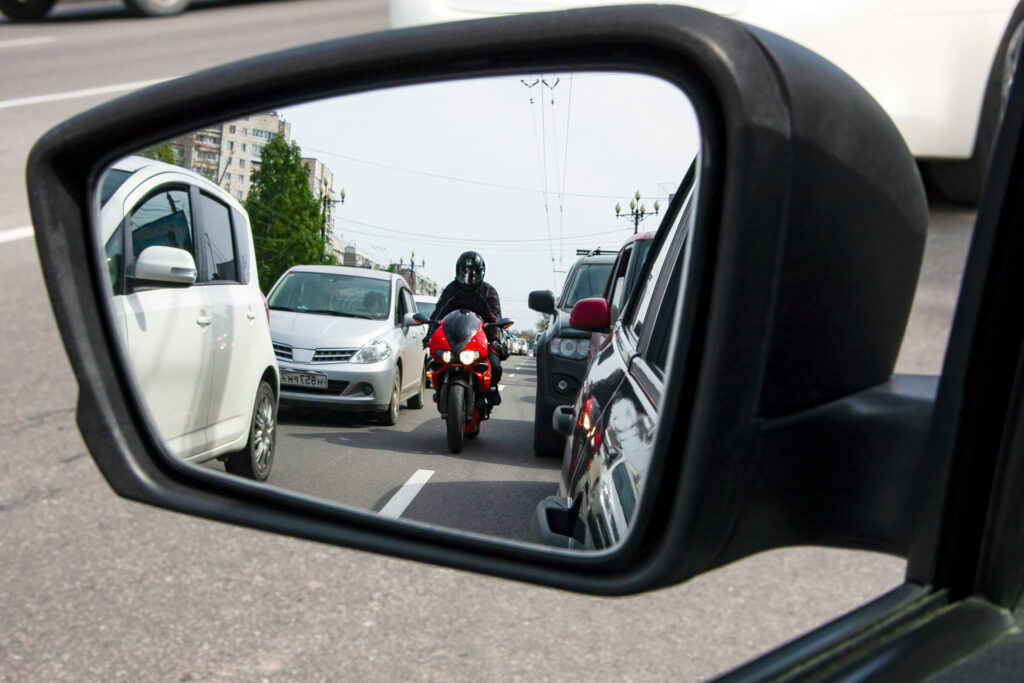
Lane splitting refers to the practice of riding a motorcycle between lanes of slow-moving or stopped traffic, typically moving faster than the surrounding vehicles. It is a common practice in some parts of the world and is legal in a handful of U.S. states, most notably California.
Lane splitting is sometimes confused with lane sharing, which is a distinct practice involving two motorcycles riding side by side within the same lane. Louisiana does permit lane sharing between motorcycles under certain conditions, but that is a separate question from whether a single rider can navigate between lanes of other vehicles.
Legality and safety are two different considerations, and in Louisiana, lane splitting raises serious concerns on both fronts.
Louisiana's Current Stance on Lane Splitting
Louisiana does not allow lane splitting. There is no provision in Louisiana state traffic law that permits motorcycles to ride between lanes of stopped or moving vehicles. Unlike California, which formally authorized lane splitting in 2016 after years of informal tolerance, Louisiana has not enacted any statute giving motorcyclists that right.
Without legal authorization, a rider who is weaving between lanes can be cited for unsafe driving, improper lane use, or similar traffic violations. From a legal standpoint, riding between lanes at the time of a crash may be treated as evidence that the rider was operating the motorcycle in an unsafe or unlawful manner.
This is tremendously important in the event of an accident. Louisiana follows a comparative fault system, meaning that fault can be divided among multiple parties. If a rider is found to have been lane splitting when a collision occurred, that conduct can be used to assign a percentage of fault to the rider, reducing or potentially eliminating their ability to recover compensation.
The risks associated with lane splitting include sideswipe collisions, dooring accidents where a vehicle door opens unexpectedly, and sudden lane changes by drivers who did not see the approaching motorcycle. If you’ve been involved in one of these accidents, contact Chaz Roberts Law at (337) 504-3202 for legal guidance on your next steps.
Safer Alternatives for Motorcyclists in Louisiana
Staying safe and staying on the right side of Louisiana law go hand in hand when it comes to lane use. There are practical, legal alternatives to lane splitting that can help riders manage traffic without increasing their crash risk or legal exposure. As a motorcyclist, you can:
- Maintain your lane position and use proper following distance to give yourself time to react to sudden stops.
- Use your mirrors consistently and practice defensive riding techniques, anticipating what other drivers might do before they do it.
- Adjust your travel times when possible to avoid peak traffic hours on high-volume routes like the Evangeline Thruway or Ambassador Caffery Parkway.
- Choose alternate routes with lower traffic density, particularly during events or peak commuting hours.
- Stay visible by positioning yourself within the lane where drivers are most likely to see you in their mirrors.
Riding within the law and following established motorcycle safety practices also makes it significantly easier to establish fault if a crash does occur. A rider who was following traffic laws at the time of an accident is generally in a stronger legal position than one whose conduct could be characterized as unsafe or improper.
What Happens After a Motorcycle Crash Involving Lane Splitting?
Louisiana's pure comparative fault system means that a rider can still recover compensation even if they were partially at fault, but their recovery is reduced in proportion to their assigned percentage of fault. For example, if a jury finds a rider 40% at fault for lane splitting while the other driver was 60% at fault for an unsafe lane change, the rider's total compensation is reduced by 40%.
Insurers and courts look at a range of factors when evaluating crashes that involve lane splitting, including:
- The speed of the motorcycle relative to surrounding traffic at the time of the crash.
- The visibility conditions and whether other drivers could reasonably have seen the approaching motorcycle.
- The positioning of the vehicles and whether the rider had a clear path.
- Whether the other driver made a sudden or unpredictable movement.
- Traffic control devices, road markings, and conditions at the scene.
- Any citations issued at the scene and how they reflect on each party's conduct.
These questions are rarely straightforward, and outcomes can differ widely based on how the evidence is collected and presented. If you were involved in a motorcycle accident, even one involving disputed lane usage, you may still have a valid personal injury claim. An experienced motorcycle accident attorney can review the specific facts of your case before any conclusions are made.
How a Louisiana Motorcycle Accident Attorney Can Help
At Chaz Roberts Law, we work to build a complete picture of what happened and pursue every avenue of compensation available to our clients.
Our approach includes:
- Reviewing police reports, dashcam and traffic camera footage, and witness statements to accurately reconstruct the crash.
- Analyzing how Louisiana law treats lane use, comparative fault, and the specific circumstances of your accident.
- Working with accident reconstruction professionals when the facts are disputed.
- Pursuing compensation for medical expenses, lost wages, pain and suffering, long-term disability, and other damages arising from catastrophic injuries.
- Advising clients on deadlines and procedural requirements under Louisiana law so that no claim is lost due to a missed filing date.
If a crash resulted in the death of a rider, our firm also represents surviving family members in wrongful death claims to pursue justice and financial recovery on their behalf.
When to Talk to a Lafayette Personal Injury Lawyer
Motorcycle crashes often result in serious injuries, even at relatively low speeds. Because riders have little protection, injuries such as head trauma, spinal cord damage, broken bones, and severe road rash are common and may require extensive medical treatment. These injuries can have lasting consequences for victims and their families, and compensation in a successful claim may play an important role in addressing both immediate and long-term financial needs.
If you were injured in a motorcycle accident in Lafayette or anywhere in Acadiana, uncertainty about fault or lane splitting should not prevent you from seeking legal guidance. Louisiana generally imposes a one-year statute of limitations for personal injury claims from the date of the accident, which is among the shorter filing deadlines in the country. Taking timely action helps preserve your right to pursue a claim and allows your attorney time to collect and preserve important evidence before it is lost or becomes unavailable.
Contact Chaz Roberts Law today at (337) 504-3202 to schedule your free case review. Our Lafayette personal injury lawyers are here to evaluate your situation, explain your rights under Louisiana law, and help you pursue the compensation you deserve.